Author Archive

DANCE UNDER CONTROL

Posted by

Dance Under Control

Artistic Research on Puppetry, Dance, and the Dialectics of Power

Residency: Dis-Tanz-Solo
Research Period: March 27, 2023 – June 30, 2023
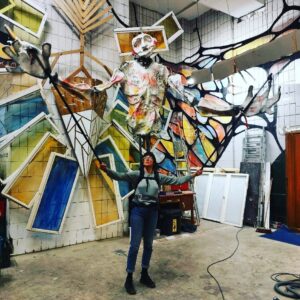


The harmony of movement between a giant puppet and its manipulators presents a fascinating field of investigation. Who controls whom in this relationship? Are the puppeteers exercising power on a grand scale, directing the body of the puppet as an extension of their own agency? Or do they become puppets themselves, caught within the physical and symbolic structures of manipulation, attempting to free themselves from the strings that define their role?

The interaction between the giant puppet and its manipulators can therefore be understood as a dance of control—a choreography of influence, negotiation, and resistance. This dynamic relationship becomes a performative representation of the dialectic between power and resistance.

Dance Under Control is an artistic research project that investigates these relationships through the intersection of contemporary dance, puppetry, and public performance.

The project originated in the winter of 2021, when I was invited by Claire Chalet and Saba Tsereteli to collaborate as a dancer, performer, and choreographer with the Theatre of Details in the production Die Be-Suchenden: A Mobile Backyard Theatre for All, directed by Claire Chalet. Through this collaboration, I became increasingly interested in the unique performative language that emerges between puppeteer and puppet. This relationship opens a rich field of physical, dramaturgical, philosophical, and symbolic possibilities.

Unlike many other performative practices, puppetry renders relationships of control and dependency visibly present. The tension between manipulation and autonomy becomes embodied through movement, allowing audiences to perceive complex power relations through physical action and choreography.

Research Context and Objectives

The central objective of this research is to investigate how a dancer’s training can open new possibilities within the practice of puppetry. By integrating principles of contemporary dance with the techniques of puppet manipulation, the project explores new choreographic and dramaturgical approaches to puppetry performance.

The research is conducted in collaboration with Theatre of Details, with the intention of continuing this partnership over the coming years through future productions, interventions, parades, and storytelling projects in public space.

The work situates itself within a transcultural and intergenerational artistic context. The performances bring together participants and audiences from diverse cultural backgrounds and age groups, allowing the project to function beyond linguistic boundaries. Instead of relying primarily on spoken language, the work emphasizes embodied communication through movement, image, sound, and gesture.

The research explores multiple layers of interpretation, including visual, sonic, symbolic, semiotic, and playful or infantile dimensions. Particular attention is given to accessibility and direct engagement with audiences in public environments such as courtyards, streets, and urban communal spaces.

Through these encounters, the project seeks to activate universal narrative structures and forms of cultural participation, situating puppetry as a tool for social dialogue and cultural activism.

Methodology and Artistic Approach

The research process consists of practical experimentation with the puppets of the Theatre of Details collective. This includes exploring how the dancer’s body interacts with the puppet’s body, how control is distributed between performer and object, and how choreographic structures emerge through this relationship.

A key methodological aspect of the research is the development of a personal approach to puppetry informed by dance practice. By engaging deeply with the techniques and traditions of puppet theatre, while simultaneously applying contemporary choreographic thinking, the research aims to generate new forms of movement and performance.

The project also investigates possibilities for audience interaction and participatory performance, particularly in public space. In this context, the research engages with the anthropological roots of puppet theatre as a communal storytelling practice while combining these traditions with contemporary elements such as dance, sound composition, visual scenography, and urban social dynamics.

During this process, I collect narratives, observations, and experiences that emerge through what I call the Dance of Control—a performative situation in which bodies, objects, and audiences continuously renegotiate relationships of agency and influence.

Research Questions

The research is guided by several central questions:

  • What are the limits of the human body, and what are the limits of the puppet as a performative body?

  • Can dance function as a form of liberation from systems of control and as a bridge toward freedom of expression?

  • Is it possible to identify a universal language of movement that transcends cultural and linguistic boundaries?

  • How can the relationship between puppeteer and puppet be understood in relation to the dialectic of master and slave described by Georg Wilhelm Friedrich Hegel?

  • Does the constant renegotiation of control between puppeteer and puppet reflect broader power dynamics present in everyday social life?

Conclusion

Through the intersection of dance, puppetry, and public performance, Dance Under Control seeks to investigate how artistic practice can illuminate the complex relationships between body, object, agency, and power. By transforming manipulation into choreography and control into dialogue, the project opens new possibilities for understanding puppetry not only as a theatrical technique but also as a philosophical and social metaphor.


The research of 3 months was just enough for touching all topics mention in the project Research application.


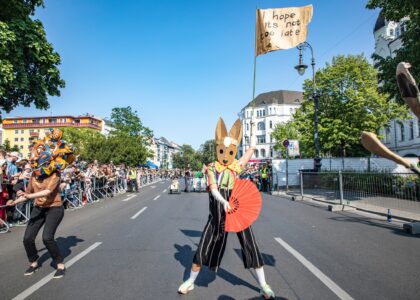
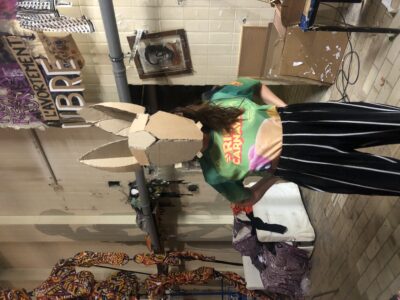
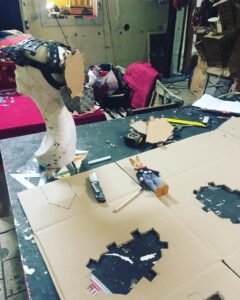
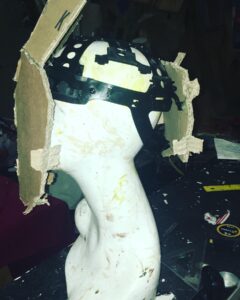
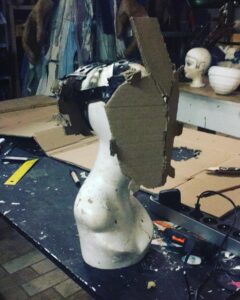
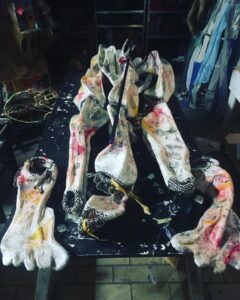
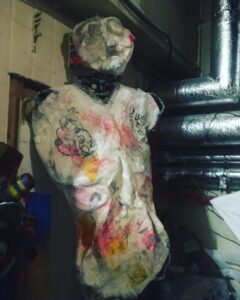
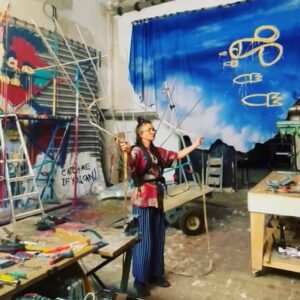
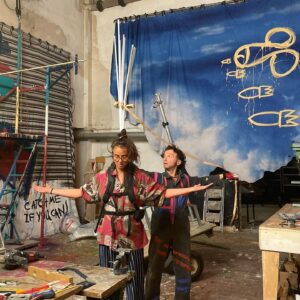
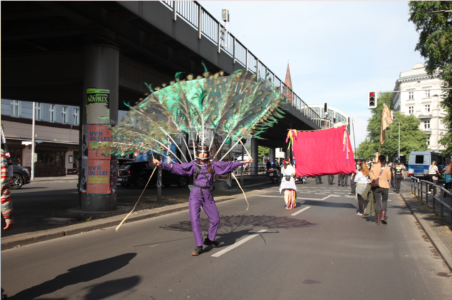
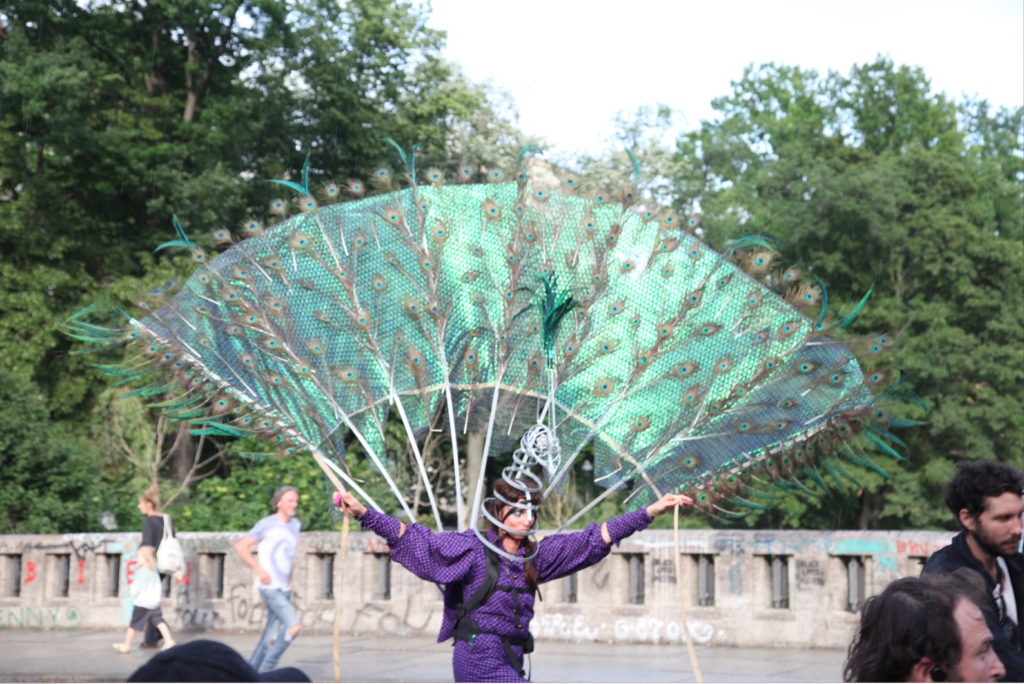
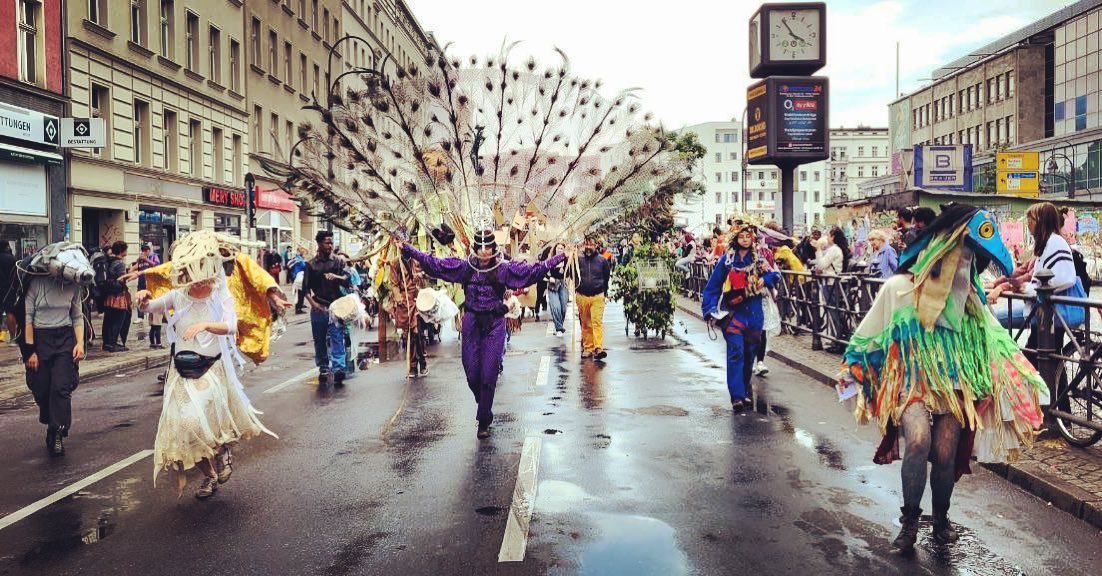
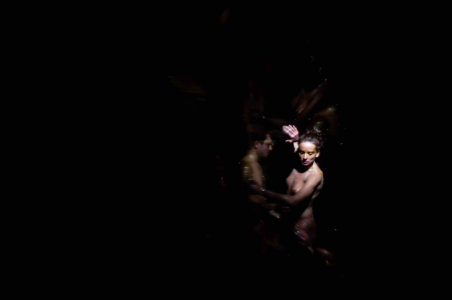
Some images of the research result:


For more Pictures of the Karneval Für Die Zukunft: https://www.facebook.com/media/set/?vanity=artistaniaEV&set=a.262673609684350


Funded by the Federal Government Commissioner for Culture and the Media in the program NEUSTART KULTUR ( aid program DIS-TANZEN ) of the Dachverband Dance Germany. 2023


ANÁLISE DE FREQUÊNCIAS ( Novas Frequências)

Posted by

ANÁLISE DE FREQUÊNCIAS ( Novas Frequências Festival 2020)

Website of the festival ” NOVAS FREQUÊNCIAS”

https://novasfrequencias.com/2020/

SPOTIFY :


Sobre Análise de frequências: Em cada um dos 40 dias que antecederam o festival, Manuel Pessôa de Lima sorteou um nome dentre os cerca de 40 artistas do Novas Frequências 10 anos, e produziu um pequeno monólogo em fita cassete que fica entre um diário e introdução do artista sorteado. Lola Lustosa partiu desse material para a produção de peças sonoras livres, entremeadas em seu cotidiano. O podcast com 10 episódios é a compilação do material gerado por ambos, incluindo a participação de convidados.

This material was fully developed in the Portuguese language.

JOY

Posted by

JOY

JOY performance
by Lola Lustosa and Joseph Devitt Tremblay

JOY is conceived as a ritual for better times. The performance reflects on memories of human joy before the transition into post-human cyber space.

Within the space, symbolic elements guide the action. Seeds evoke prosperity across the many layers of human needs. Magnetic stones are placed as attractors of joy for those present. Yellow candles illuminate the environment, bringing warmth and light to the shared moment.

JOY is offered to the public as a collective gesture.
An act.
An intention.

Berlin, 2020
@Festive Prep for the Finissage

Trilogy for a Life Standing

Posted by

Trilogy for a Life Standing Is a collection of 3 performances – Part 1 Splatter, Part 2 No ID Represents Me, Part 3 Hologram – to be developed and merged into one piece.

Realization Lola Lustosa & BROKEN LOOP Collective (Anastasia Alekseevna, Jarkko Räsänen and Lola Lustosa)

Work in progress Part 1 Splatter is the first project of the BROKEN LOOP collective and has been shown at Plataforma Berlin Iberoamerican Festival at Verlin and Deviation Festival, curated by Musterzimmer, at Acud Macht Neu, Berlin. 2018.

The work is a free deviation and it proposes a loop structure studying with slide projections and recording sounds loops on stage. The soundscape is combined with theatrical gestures resulting into a trance/psychedelic sessions.

Poem:

Are you there ? Shaw we forget everything? The best witness is the one who says that nothing has happen. Did you look out side? What do you see? My illness is your Blindness, your blindness is my illness/ or my power. Why to avoid me ? Is my light to strong? Or your reflection to bad? Can we break this loop? As much you avoid to look, as big I am, as big I am, as far we are. All in the same boat a boat called time. “ Let it die I would say. Let it come a new Beginning” But I would not let it go: the sounds of the river, the singing of the births, the sea, the warm of the sun, the rush of the wind, the storm, the colors, the air, the rain and the smell of the new being.     I feel Pain. Giving me ashes! That nothing has happen at all. One, one, one, one, one, one, one, one, one …..

Lola Lustosa , Annonay , France, April 2018

Work in progress Part 2 No ID Represents Me (Premiere) DOCK 11, Berlin, 2016 raises questions such as: is it possible for a body to knowlege? Where did we come from? What time are we living in? Are we drag characters of this time and are we going to break away from this existential loop?

A mirage opens from a compulsory displacement/ shift of the ego from the inner self, when the experience is gone. The inner self starts a journey back to where it had never left before. Infinite, everything and nothing are now accepted as dialogue by this ultra conscious body.

The artist is nude or not (it depends of the rules of the space), shifting from one position to another in between the public with holding a mirror in front of her face she reflects the light from the spotlight on the public. All movements are very slow and remain an urge for new ritual. The public can interact with the performer while reflecting itself on the dirty mirror or touching the body of the artist.

poem:

Hello. Please. Sorry. I don´t have too much time. This is the first time I have the chance of showing myself. I write in the dark. You have never seen me because I do not exist. I do offer my time to give you illusions. There is no way back when you write in the dark. What to correct if nothing has ever existed? Still, my hands move trying to affirm that I have tried to explain the unexplainable. Come closer, I don´t have so much time. Touch my belly button. Is that proof that we have been born? I am nothing. Sometimes we can be seen. Every single clack so presious when I am. I can sleep. The question was.

Lola Lustosa, Berlin, 2016

password: penetraveis

To be developed Part 3 Hologram and premier as work in progress at DOCK 11, 2019, at Plataforma Berlin Festival together with Splatter and No ID Represents Me as a final format of the “Trilogy For a Life Standing”.

Hologram is physical structure that diffracts light into an image. As a possible ending point of the trilogy hologram translates the whole, the universe, the total, the complete, the safe and sound.

The performer is now in a dark room out of the stage with a top light where a camera is filming and connected to a live projection on stage. The light of the projector is reflecting on dark layers of fabrics set on stage. Live projections, live sound and words are now inviting the public to enter the stage.

On residency during the Morni Hills Performance Biennale II at Panjab University Museum, in Chandigarth, India, 2018 I had the chance of performing “ NO ID Represents Me ” and to reflect on the concept for the whole trilogy by having interesting conversations with other artists at Morni Hills residence some directions got formed.


– Becoming a Hologram.

– A feeling of being a hologram.

– The hologram as an image for the inner self.

– The holograms could feel each other.

The Acceleration of the transition from the natural reality as we have experienced until now into virtual and artificial reality and intelligence globally is the trigger to escape the visual experience, mind and feelings of human form into hologram form: to find a way of presence and permanence in life.

“The people through its own fault/ Has lost the confidence of the government/ And only by redoubling its efforts/ Can it win it back/ Would it not be easier than/ For the government to dissolve the people and elect a new one? will have any positive effect; the ghosts of the dead won’t let themselves be subdued by barrels of TNT. No one who’s given some thought to what the European states were like in the time of their splendor can look at what still goes by the name of state these days and see anything other than failures. Compared to the transnational powers, the states can no longer maintain themselves except in the form of holograms.”

“All the reasons for making a revolution are there. Not one is lacking. The shipwreck of politics, the arrogance of the powerful, the reign of falsehood, the vulgarity of the wealthy, the cataclysms of industry, galloping misery, naked exploitation, ecological apocalypse we are spared nothing, not even being informed about it all. Climate: 2016 breaks a heat record, Le MOND announces, the same as almost every year now. All the reasons are there together, but it’s not reasons that make revolutions, it’s bodies. And the bodies are in front of screens.” Extracts from political/philosophical book by The Invisible Committee called Now


S/T UNTITLE

Posted by

UNTITLE

🙂 This was my first work

The video art piece aims to polarize the following questions:

  • Human × Mechanical

  • Formation × Form

  • Process × Product

  • Sound external to the image × Sound inherent to the image

  • Minimalism (repetition) × Historical Time (epilogue)

  • Formal experimentation with video effects × Narrative

  • Musical parallelism × Visual parallelism


References

  • Informal Abstraction in painting from the 1940s and 1950s

  • Expressionism

  • Minimalism

  • Dance (choreography)

  • Motherhood

  • John Cage (musical parallelism)

  • Kodo (percussion)


Ideas

“A visual musculature of the video medium.”

“To see things is to forget their names.”
Untitled. Unnameable.

“Cardioplastic.”

“A choreography of lights.”

“A strongly pictorial work.”

“Human figuration suggested.”

“The work narrates itself.”

The mixing of the music “She Is Asleep” and “Music for Four” by John Cage forms a musical monolith, which gives voice to the abstractions.

“A musical monolith occurs when the music is continuous, without intervals for silence.”

“The non-forms gradually transform into organisms, water, body, and abyss, suggesting abstract events that gain a story through the editing process. These abstractions materialize intimate feelings, where the viewer encounters the abyss that the body itself can reveal.”

“In the epilogue, the excerpt from ‘Monochrome’ by the percussion ensemble Kodo introduces a moment of union. Until then, images and music move in parallel throughout the work. Here they coincide, appearing to form shape and body—yet still remaining abstract.”


Synopsis

(Title of the work), with a duration of “X” minutes, seeks to polarize key questions of the contemporary world, among them: the human versus the mechanical; repetition versus difference; the factual and its subjective projections.

It is an overtly abstract and formalist experience (figures tend toward dissolution or a ghost-like presence), questioning the video medium itself and its effects.

From visual arts—such as Informal Abstraction, Abstract Expressionism, and expressionist figuration—to music—such as dodecaphony and minimalism—the work also reflects tensions between the absence of narrative and the presence of an epilogue, sensuality and physicality, psychological time and historical duration.


Credits

Author: Lola Lustosa
Concept: Lola Lustosa
Photography: Lola Lustosa
Camera: Lola Lustosa
Music: Lola Lustosa
Editing: Sofia Karan
Collaboration: Sofia Karan


Music

  • She Is AsleepJohn Cage

  • Music for FourJohn Cage

  • MonochromeKodo


Acknowledgements

  • Noboyki Osaka

  • Marcio Tinoco

  • Christian Gaul

  • Helena Lustosa

  • David Cury

  • Claudio Montagna

  • Miguel Rio Branco

  • Cristina Santa Maria

  • Gilberto Loureiro


VEDA

Posted by

VEDA is a CINEPOEMA made by Lola Lustosa and Vanessa Cokaric. The work is manifest in favor of humanity and the collective future. Have you stopped to think about what it does mean to bring one into life today? What is the power of that? The film is a tribute to the ones that never desist of the yang generations and will fight for harmony with nature.

Was having its first steps/ screenings at Philosophy Unbound TOXICITY 2020 @ Chitkara University and Grove 2020, India, and is provoking positive feedback.

“Overall I can say that I was really impressed by the work. I was very impressed by the way you danced and made your pregnant body subject of this very multi-sensorial experience. I think this is what stayed with me the most: that it touched me on various different levels: from the more “rational” layers (the texts about population growth, climate change, etc.), to the music and the corporeal languages…” Kilian Jörg, TOXICITY 2020. India.

…” Drumbeats follow and she’s playing with the hourglass lying on the floor. She slowly rises from the floor, squat. One cannot but be a part of this shamanic ritual. She’s the dancer of choices between the realms of living and coming-to-life. She has time on her hands, and it is by choice that she’s dancing. Her ritual is the dance; it purges her being off the dust of everyday sleeplessness. In this purge, intimacy is born again. She has opened herself again to the state of feeling, she can breathe again. This is expressed in the monologue, that follows the ritual. Her dance has evolved into unmediated expression, the seat of art itself, and has found the sublime.”…
Text by Blue Magpie, at the Winter Dialogue – 2020, organized by Grove. India.


25min

Concept / Camera / Direction/ Editing: Lola Lustosa

Performer/ Text / Voice Over: Vanessa Cokaric

Music: Jarkko Räsänen/Klaas Hübner/ Lukas Rutzen

Audio Mix – Post-production Janne Särkelä

Berlin, 2020

Free to watch from 8th of March 11:11 AM to 10th of  March 11:11 AM  ( WOMEN’S DAY)

English Subtitles


Portuguese Subtitles


WATCH THE TRAILER HERE!


The Short Film is Ready & LOOKING FOR FESTIVALS AND BROADCASTS 


If you are interested in seeing the final result please get in contact with me by mail. Check Contacts.


Veda Criticism

(Text by Blue Magpie, at the Winter Dialogue – 2020, organized by Grove. India.) Full Text.

The 25-minute Veda by Lola Lustosa and Vanessa Cokaric is a poetic immersion into the genesis of a new life form in otherwise a conflicting society. Studded with voiceovers, text, and varied soundscapes, Veda makes for an empathetic viewership, where the performative body of a dancer communicates between the virtual and the Lebenswelt. Borne in the belly of this performance, is an innocent desire on the threshold of its coming to life. The performance takes place in a living space, a room, in the form of dance in relation to the object of time, an hourglass. This structure is immanent to the design of the film, and must not be seen isolated in any possible semantic realm.

A pair of hands somewhat caress a belly in the opening scene against a black background filled with sounds resembling electric shocks. We’ll leave it to that, for the representation of any kind is an arbitrary endeavor and presupposes a distraction to immersion. This philosophy perhaps reinforces the artistic intention of Veda: To see the film for itself and not as a symbolism tended towards abstractions in possible world semantics. One may, therefore, start thinking of Veda in terms of empiricism, phenomenology, and even hermeneutics. The opening scene serves as an insight into the what-it-feels-like of the performer. This phenomenon further evolves into an elaboration after the title appears on the screen, where we see the performer as a body and not as just a belly, for the first time. The body crawls to the hourglass in languid uneasiness of her becoming. The performer, Vanessa, is also speaking, but her lips don’t read any recognizable linguistic possibility. The voice-over technique here is meticulously placed and deepens the visual immersion into the mindscape of the performer cast by an internal monologue. She speaks of an inability to sleep lined by a stream of thoughts that seem to have her suspended in waking life. The body has to keep moving though, which we see on the screen with her movements on the floor, holding the hourglass, and finally rising from the floor. The monologue arises in the threshold, where both the bodies (of the performer, and a body-becoming in her belly) speak in a mother-tongue. This tongue is molded in the language of care, concern, and a desire of passing on dance as knowledge to the in-coming life form. Perhaps dance is pure movement and can only be transmitted as dance… She rises into a set of carefree movements and the body-becoming certainly is summoned to these movements.

The room of thought is lit with sunlight drifting in through the windows. Is it day-time? Her movements follow to a black screen where white words appear lining the length of the screen with statistics of birth in our society. This is where the performance world of the film enters into a conversation with a shared reality of the Lebenswelt. In other words, the personal monologue transforms into a dialogue, between the performer and the audience. The audience, so to say, is speaking, because they read the words as they appear on the screen. If not explicitly vocal, the conversation takes place in the mindscape universe of performer and audience. This speaks volumes of the production finesse of Veda, as far as the technical aspects of film-making are concerned. What is important to note is also the fact that the screen facilitates speaking of innumerable voices, when the film is screened at film festivals and art events. The volume of speaking audience voices always already realizes the intensity of a collective human world we live in, which translates into empathy for the performer in her concern of contributing another number to the world population. This feeling has been able

to show childbirth very clearly as a choice, rather than a necessity, which again illustrates the power of Veda in the discursive realm.

‘And what about nature?’ – The performative voices this question into the opening of the next scene filled abound with rain and forest sounds. She is dancing all the more carelessly but is seen on a series of mirrors placed on the wall. The gaze is diagonal, otherwise, it would reflect the film camera on screen. But this gaze serves another purpose. The one of reflection – Look into nature, she’s within it, dancing to the rain and storm alike, birds sing to amuse, perpetual flow, the harmony all of us deserve. The audience becomes hostages to refection (thinking) and this reflection is rather strong, for it contrasts the realities of humans, with the living world of nature. This is not to be presupposed as a dichotomy between nature and culture, for the performance is located both in culture and nature as a bodily movement.

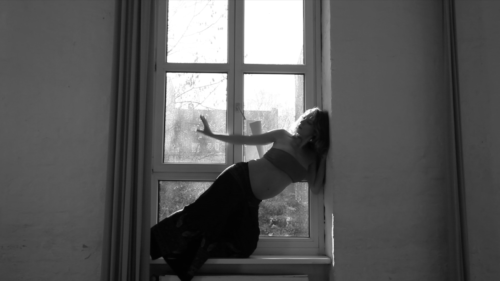
She climbs onto the window sill and the diagonal camera gaze is maintained to the point where nature sounds are cut of abruptly and chaotic bubbles of sound appear. Vanessa can be seen on the window; her movements are in tune with the cavity of the window. Is it the moment for choice? But nature sounds reappear starting from a bird chirp and ranging to thunder and rain. The uncomprehended nature of this scene is a break in the reality of immersion in Veda. Perhaps for the first time in the film, one might feel alienated. She is still moving on the window sill. Alienation is not groundless but is on a slippery ground for sure. The world of humans, reflection in nature, internal monologue, and the dialogue of concern, all have contributed to this slippery slope of alienation. In order to feel the alienation for itself, we must not prophesize about the scenes to follow. In Veda, this design of alienation is immanent to its structure: there is almost a sacred balance between alienation and immersion – so much so that the alienating stance does not break through the primordial fabric of immersion.

Still on the window, with the hourglass in her hand, another monologue is voiced. While her hands play with the hourglass, the monologue speaks of a time in general. Both the bodies are breathing together in time, they are moving, hence creating time. She is back on the floor with the hourglass now and the monologue fades into a soundscape of movements in spacey waters. Time is not linear, and therefore the narrative as well. At best, one can see Veda as a juxtaposition of impressions on a slippery floor of discourses on childbirth, population, time, nature, and desire.

Drumbeats follow and she’s playing with the hourglass lying on the floor. She slowly rises from the floor, squat. One cannot but be a part of this shamanic ritual. She’s the dancer of choices between the realms of living and coming-to-life. She has time on her hands, and it is by choice that she’s dancing. Her ritual is the dance; it purges her being off the dust of everyday sleeplessness. In this purge, intimacy is born again. She has opened herself again to the state of feeling, she can breathe again. This is expressed in the monologue, that follows the ritual. Her dance has evolved into unmediated expression, the seat of art itself, and has found the sublime.

She is able to FEEL the life breathing in her, which is not just a number to the populous generality. In her expressions of a joyous monologue, the film camera moves all around and retreats into non-existence focused at the hourglass on the floor. Very abruptly indeed, Veda

concludes with end credits displayed on a black screen. There are no resolutions to the general kind. But as far as art is concerned, her stance in the living world is that of dance. It is a liberation to discourses and demands in general. If one could paraphrase in Nietzsche’s words: Veda is that slippery realm, which is a paradise for those who know how to dance.

***


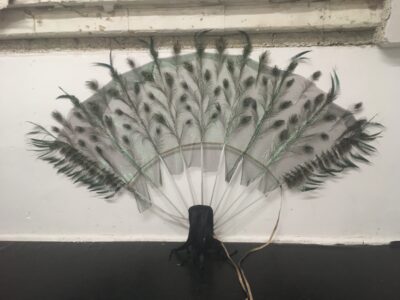
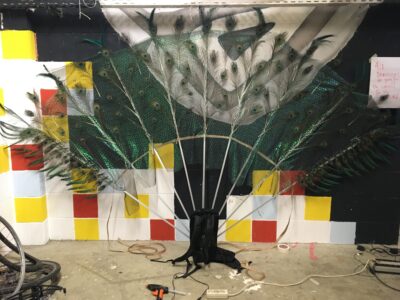
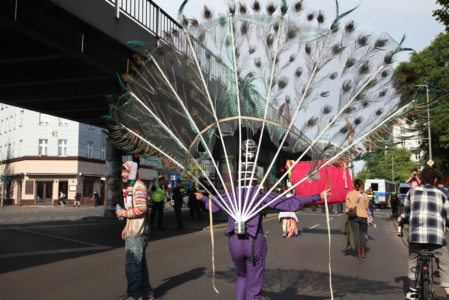
METAPEACOCK An Infinity Piece

Posted by


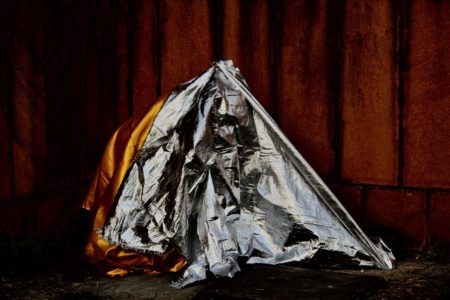
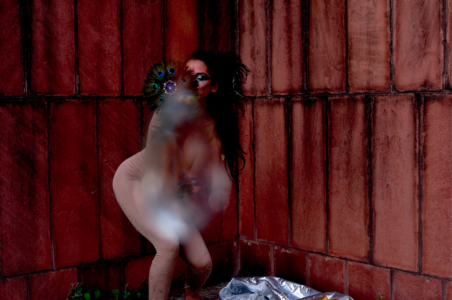
METAPEACOCK An Infinity Piece is conceptualized to be a collection of performances in constant transformation. That intent to create live site-specific performances/installations living in the future as photo series and video installations.

METAPEACOCK I @ MORNI HILLS PERFORMANCE ART BIENNALE II, Chandigarh, INDIA, 2018

To transform, to transcend, to metamorphose, to escape from common narratives, and embrace your inner self-images. Open gates into a prismatic point of view.


METAPEACOCK II ( Reborn “IT” with Samuel Beckett) @ FESTIVE PREP FOR THE FINISSAGE, Berlin, GERMANY, 2020


Concept, Performance, and installation by Lola Lustosa.

Ambient Music: Laura Leiner and Simon Rose.

Video Documentation: Joseph Devitt Tremblay. Second camera: Alexander Norton.


The video Documentation was part of Lange Nacht der Bilder, Berlin, GERMANY, 2020

METAPEACOCK III metaphysical clash @Raum für Raum, Berlin, 2022

METAPEACOCK III metaphysical clash. Peace and fertility Fauno vibes with … us. In memorial of the Souls of Nijinsky and Claude Debussy.

Performance by Lola Lustosa and guests: Tsuki Berghain & Akkamiau

Video: Lola Lustosa


Video: Lola Lustosa


Video Installation : Metapeacock III Metaphysical Clash 38” Peace and fertility with “Afternoon of a Faun” In memorial of the Souls of Vaslav Nijinsky and Claude Debussy. Berlin 2022 By Lola Lustosa Performer/Singer/ Director/ editor/ Concept By Lola Lustosa Sound: Akkamiau Kočiči Camera: Joseph Devitt Tremblay The work is part of the series METAPEACOCK An Infinity Piece METAPEACOCK An Infinity Piece is conceptualized to be a collection of performances in constant transformation. That intent to create live site-specific performances/ installations living in the future as photo series and video installations. The work was shown at Berlin Art week, @MMAE720, 2024

METAPEACOCK IV A Cityscape Symphony

The creation of an urban soundscape through sound is a dynamic and complex process that involves a combination of natural and human-made elements. In the context of the festival theme “Urban Silence” of the 48h Neukölln Festival, the interplay of different sounds contributes to shaping the urban soundscape into a unique video/sound symphony.

Our project aims to capture an audiovisual journey within the surroundings of the district of Neukölln, ranging from macro to microscopic perceptions.

By Lola Lustosa and Mahir Duman. Music Defeo.

METAPEACOCK V Terra to be continue ( in process)

The project is looking for new venues, art residences & new forms of media exposure.


BIG DADA

Posted by


Big Dada – audiovisual coreography coming up in collaboration with Ana NastasiaAnna HäkkinenTabula RasanenLauri IsolaIlmo Paukkunen, Pilvari Pirtola, Sarana and Samuli Häkkinen. “Big Dada” – @ Asbestos art space 18.6 19.6 &20.6, Helsinki, Finland.

http://iltaehti.fi/


Work in progress Part 1 Splatter is the first project of the BROKEN LOOP collective and has been shown at Plataforma Berlin Iberoamerican Festival at Verlin and Deviation Festival, curated by Musterzimmer, at Acud Macht Neu, Berlin. 2018. Also part of Big Dada, asbestos gallery, Helsinki (FIN), 2019 The work is a free deviation and it proposes a loop structure studying with slide projections and recording sounds loops on stage. The soundscape is combined with theatrical gestures resulting in trance/psychedelic sessions. Concept: Broken Loop Performer/Text/ sounds/ Loop: Lola Lustosa Sounds / Loop: Jarkko Räsänen Lights / Loop: Anastasia Alekseevna

LIGHT, DARKNESS AND SURPRISE

Posted by

LIGHT, DARKNESS AND SURPRISE

Photo documentation: Paco Justicia

Performance

Alejandro Chellet & Lola Lustosa 

Light: the essence of life and the source of growth.
Darkness: a departure or arrival point for life or death.
Surprise: the factor of destiny or karma.

Alejandro was invited to 22cubic residency at Materic in Barcelona where he researched the universal darkness, light and surprise. During his creative process he studied and played with the light already in the gallery coming from the street. He then built a dark cube and stayed inside for many hours isolated with no contact to the outside world and no light stimuli apart from the visions sought from the inside. During this process he questioned himself: How far can we go? Where does our body, spirit and mind ends? What exists at the edge of everything? Is there such thing as body’s limits, gender limits, lifestyle limits, perception limits and even the limits of love itself?

Alejandro met brazilian artist Lola Lustosa in Morni Hills Performance Biennale in India, since then they began an artistic partnership. During 22cubic Alejandro´s residency he invited her to co-create this public performance for which she also conceived an installation of prismatic lights and its perspectives.
They offered an interactive performance piece that invites the audience into a cosmic experience of time travel. Everyone comes into a dark degrade space followed by a pitch black cube. This performance creates a space where the public experiences multiple emotions and surprises, photo memories from the prismatic lights,  displacement from its own body and ultimately embracing complete darkness in collective breathing.


Dark research/ motive/ poem/ performer/ concept: Alejandro Chellet
Prismatic lights and its perspectives in movement/ poem/ performer/ concept: Lola
Lustosa.

The artists elaborated this text shared during the performance:

“ Nigrum, Nigrius, Nigro”

El deseo de ver

Miedo de la muerte

Lo que está dentro está fuera y lo que está afuera esta adentro.

Porque  el negro es tan prejuiciado ?

El mundo invertido

La profundidad de la perspectiva el abismo

Azul.

Amarilo.

El sol es obscuro, sus rayos son obscuros y la luz es su revés. Los obscuros y la luz es su revés. Los rayos amarillos son apenas lo que el sol nos envía.

La profundidade de una imagen nos lleva a participar de la profundidad de nuestro ser.

El devaneo.

El negrume secreto de leche.

(Poem based on extracts from the book: La Terre Et Les Rêveries Du Repos, 1948. Bachelard, Gaston.)


At Materic, Barcelona, 2019

For this collaboration, Lola Lustosa counted with support from Graner in Barcelona. 2019


I AM HERE TO STAY

Posted by


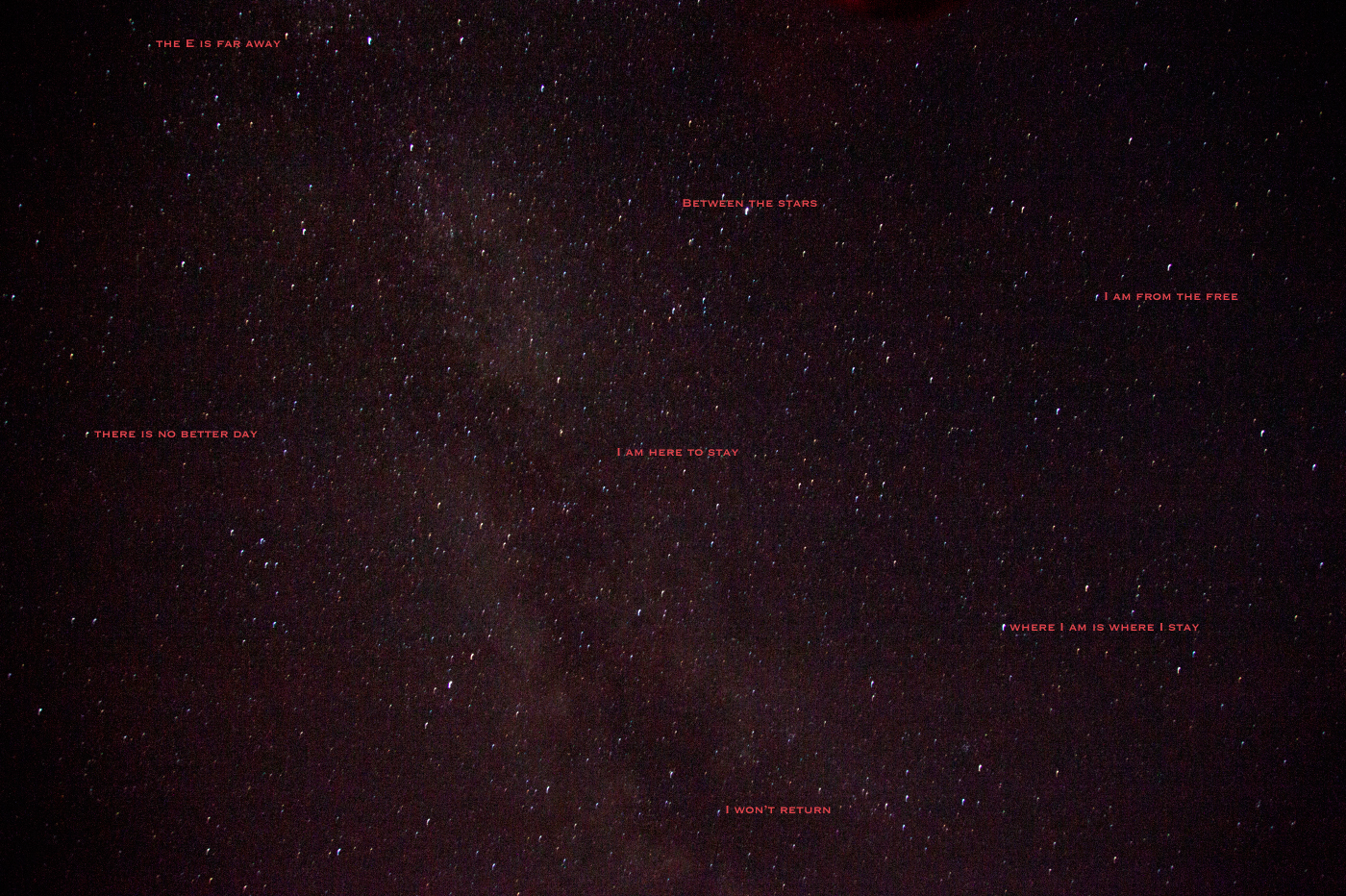
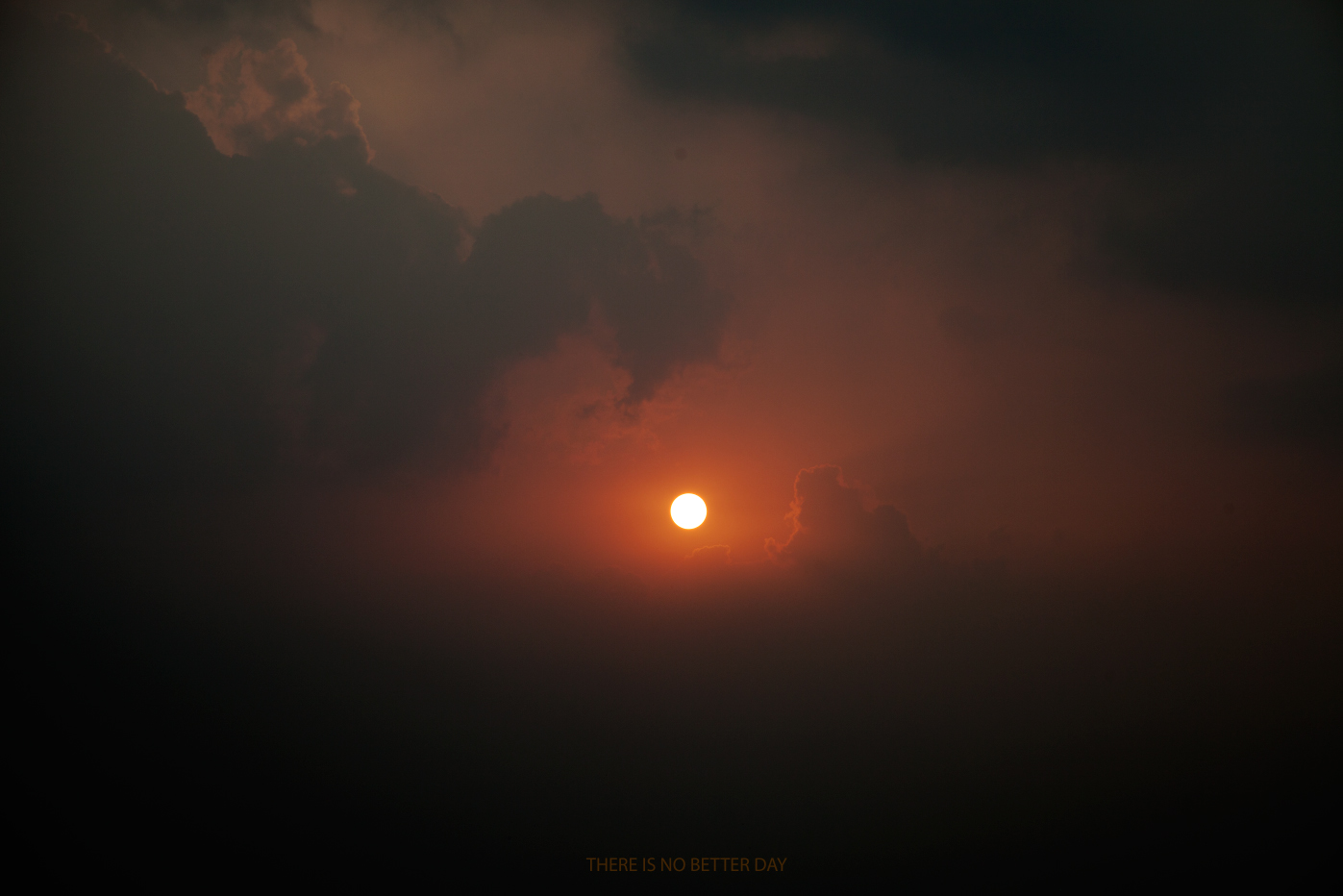
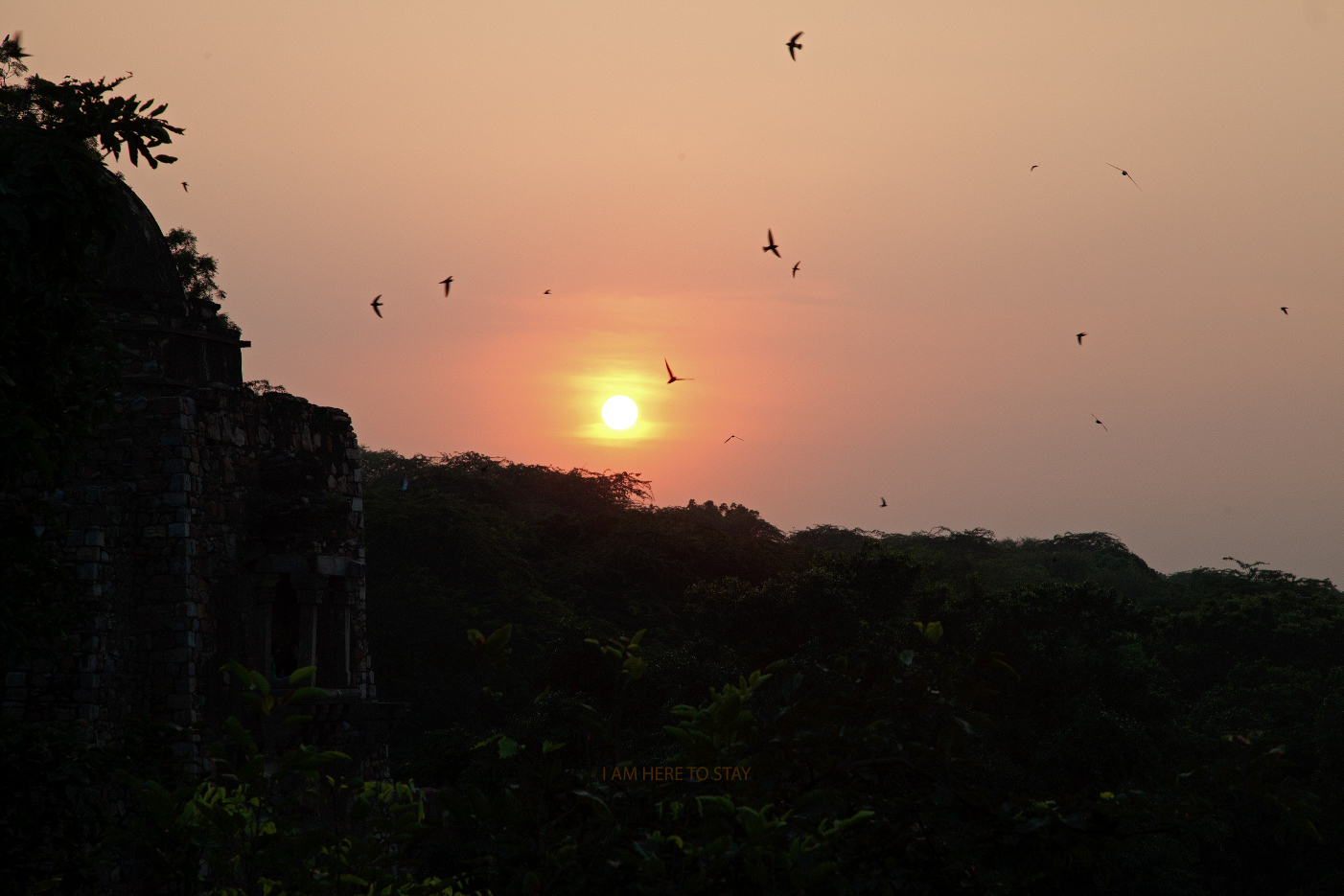
I AM HERE TO STAY is a photographic series documenting landscapes across India. Created following the artist’s journey to the country in 2011, the work emerged from a period of reflection on time, displacement, and the uncertainties of the future within contemporary society. The landscapes function not only as places but as spaces for contemplation, where personal experience intersects with broader existential questions. At the core of the series lies a simple yet profound inquiry: DID THE UNIVERSE LOSE MY EGO?

Although the series has not yet been exhibited, it marks an important moment in the artist’s ongoing exploration of identity, presence, and the relationship between the individual and the vastness of the world.